Sujata vs Bajaj mixer grinder: Is Sujata Worth Extra ₹2000?
Buying a mixer grinder in India is confusing. You are likely stuck between the two biggest names in the market.
On one side, you have Bajaj. It is affordable, sleek, and sits in millions of Indian kitchens.
On the other side, you have Sujata. It costs about ₹2000 more, looks like an industrial machine, yet every juice shop owner swears by it.
Is the extra money actually worth it?
This Sujata vs Bajaj mixer grinder guide gives you the honest answer. We didn’t just read the box specs. We analyzed real-world durability, spoke to local repair technicians, and compared 5-year ownership costs to see which brand respects your hard-earned money.
Also Read: If you are considering other premium options, check out our Sujata vs Bosch TrueMixx comparison to see how German engineering stands against Indian durability.
30-Second Summary on: Sujata vs Bajaj Mixer Grinder
In a rush? Here is the cheat sheet:
The Heavy-Duty Winner:Sujata (Dynamix/Powermatic)
- Best for: Large families (4+ members), daily Idli/Dosa batter, and grinding tough turmeric.
- Why: It runs non-stop for 90 minutes. It’s ugly, but it doesn’t die.
Checkout the Best Deal For Sujata Dynamix On Amazon
The Budget Winner:Bajaj (GX Series/Rex)
- Best for: Bachelors, small families, or renters.
- Why: It saves you ₹2000 upfront. It handles basic chutneys and tomato purees perfectly.
Checkout the Best Deal For Bajaj Mixer Grinder On Amazon
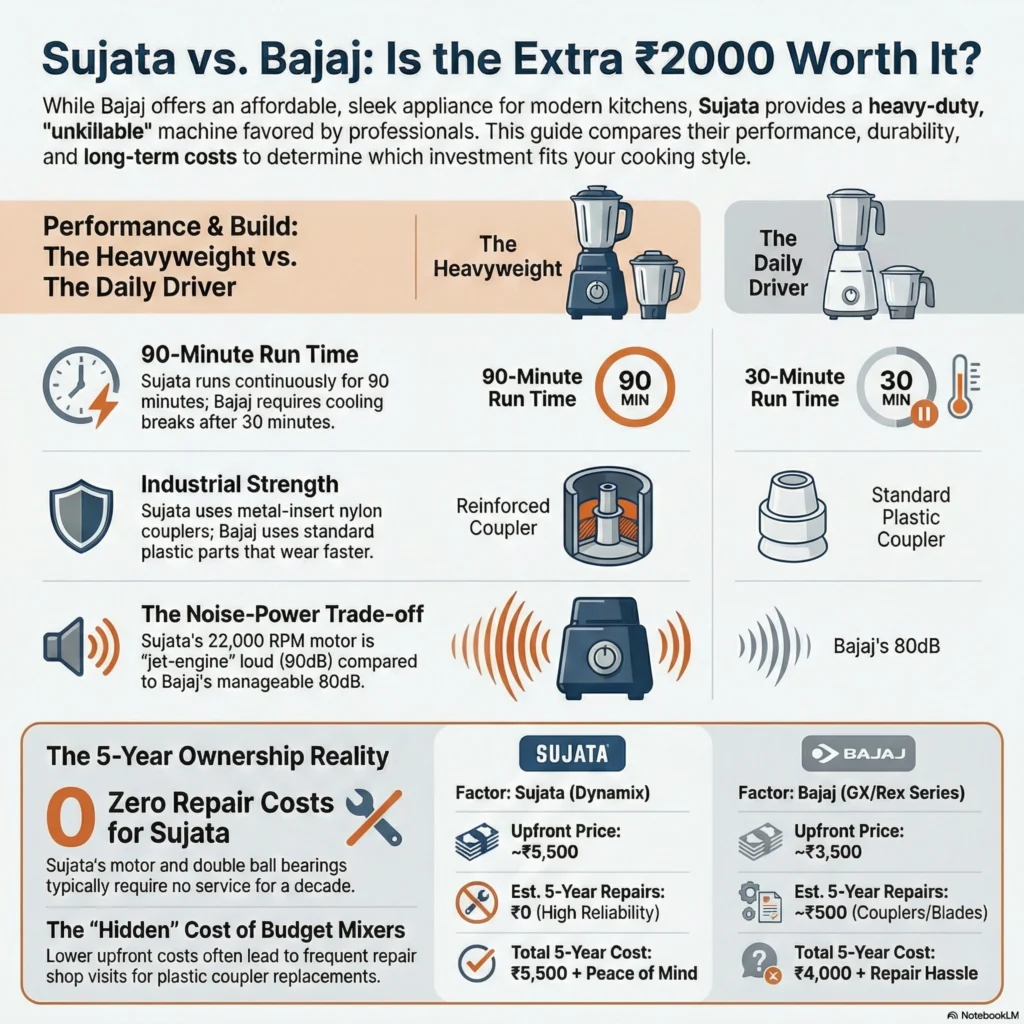
The Core Differences: Benefits Over Specs
Before we look at the boring numbers, let’s talk about what you actually feel when you use them.
When you touch a Bajaj mixer, it feels like a standard home appliance—lightweight and sleek. The knobs are smooth plastic.
When you lift a Sujata, it feels like industrial machinery. It is heavy. The base is wide. The knob clicks with a hard “thud.” It doesn’t feel pretty; it feels like it wants to work.
Here is the simple breakdown of what that means for you:
| Feature | Bajaj (GX Series/Rex) | Sujata (Dynamix/Powermatic) | The Winner |
|---|---|---|---|
| Non-Stop Run Time | 30 Minutes (Needs cooling breaks) | 90 Minutes (Runs continuously) | Sujata |
| Grinding Power | Good for chutneys & purees. | Crushes hard turmeric & idli batter. | Sujata |
| Durability | Plastic couplers wear out. | Built like a tank. | Sujata |
| Noise Level | Loud (80 dB). | Very Loud (90 dB). | Bajaj |
| Price | Affordable (₹3,000 – ₹3,800). | Premium (₹5,500 – ₹6,000). | Bajaj |
| Buy From Amazon | Check Price on Amazon | Check Price on Amazon |
The Bottom Line:
- Pick Bajaj if you want a machine that looks good and handles light daily cooking (Chutneys, Shakes).
- Pick Sujata if you want a machine that is “ugly but unkillable” for heavy grinding (Idli Batter, Turmeric).
Comparison Note: Still undecided? See how Sujata competes against another popular brand in our Sujata vs Philips mixer grinder review.
Performance Test: The “Idli Batter” Challenge
The real test of any Indian mixer is not making a banana shake. It is the Wet Grinding Test. This is where the price difference between Sujata and Bajaj actually makes sense.
We compared them on three stress tests: Heat, Hard Spices, and Texture.
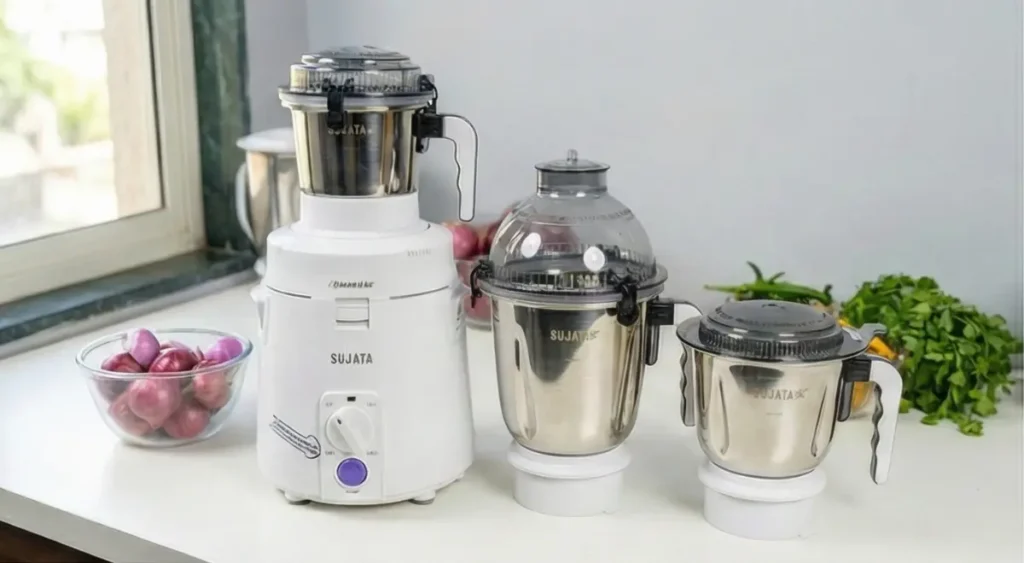 Sujata MIxer Grinder and Jars
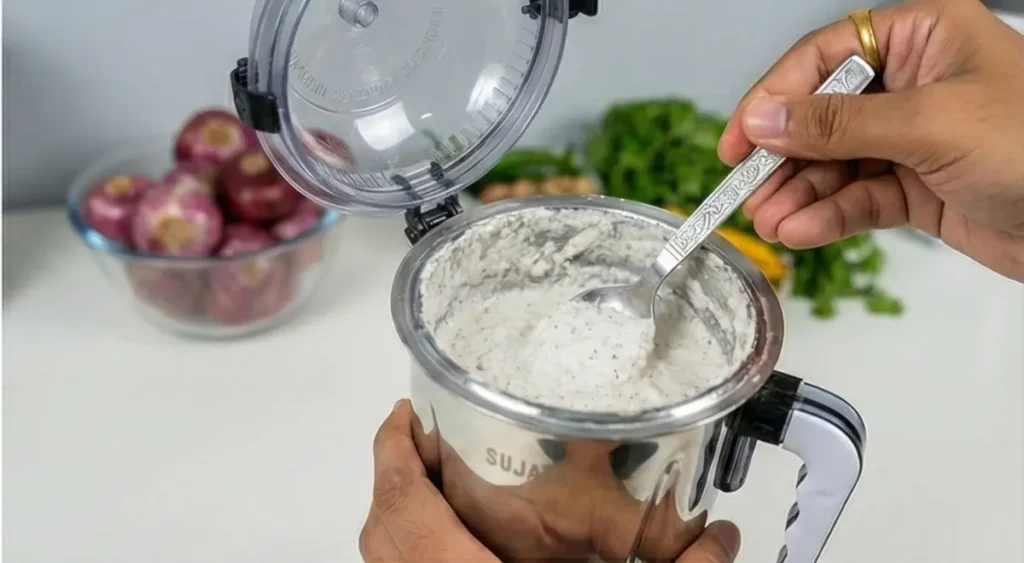 Sujata Mixer Grindre wet grinding Test
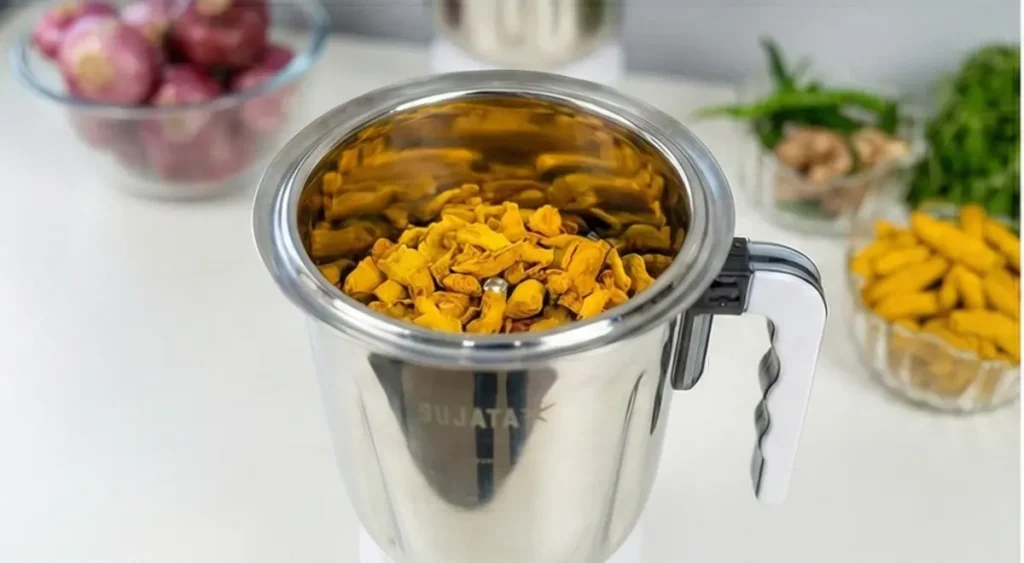 Sujata Mixer Grindre Turmeric Test
1. The Heat Test (Dosa Batter)
Have you ever touched your mixer jar after grinding Dosa batter? It usually feels hot, right?
- Bajaj (750 Watts): It is powerful, but it gets tired fast. If you try to grind three batches of batter back-to-back, the base gets warm. In some cases, the “Red Overload Button” will pop out to save the motor, and you have to wait 15 minutes for it to cool down.
- Sujata (900 Watts): This machine is a marathon runner. It uses Double Ball Bearings, which reduces friction. You can run it for 90 minutes non-stop. You can grind batter for a large family feast, and the motor won’t even struggle.
Note on Electricity Bill: Because Sujata is 900W, it consumes slightly more electricity per hour than the 750W Bajaj. However, because it grinds faster, the actual difference in your monthly bill is negligible (less than ₹50/month).
Winner: Sujata. It is the only choice if you cook in bulk.
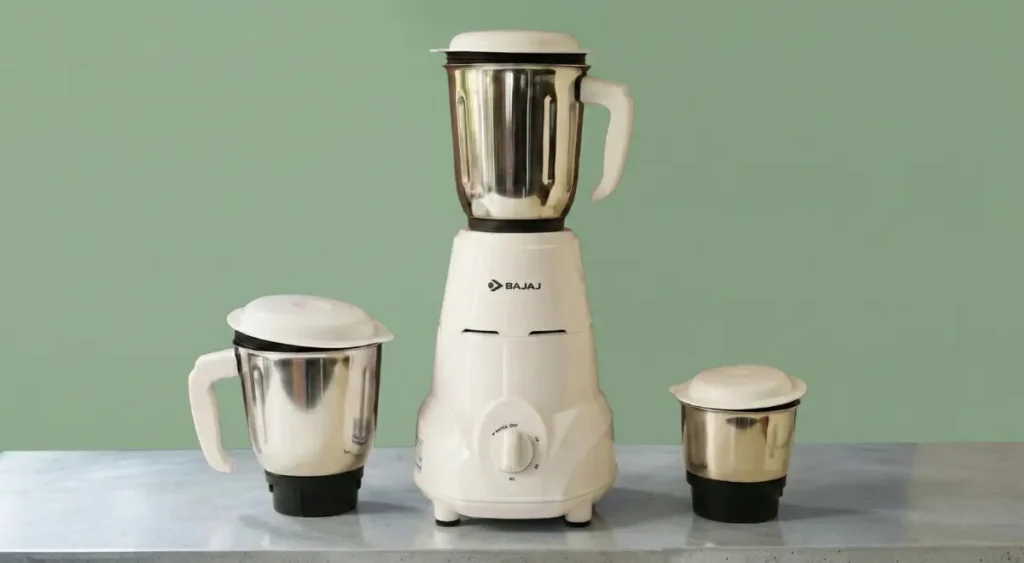 Bajaj Mixer Grinder with Jars
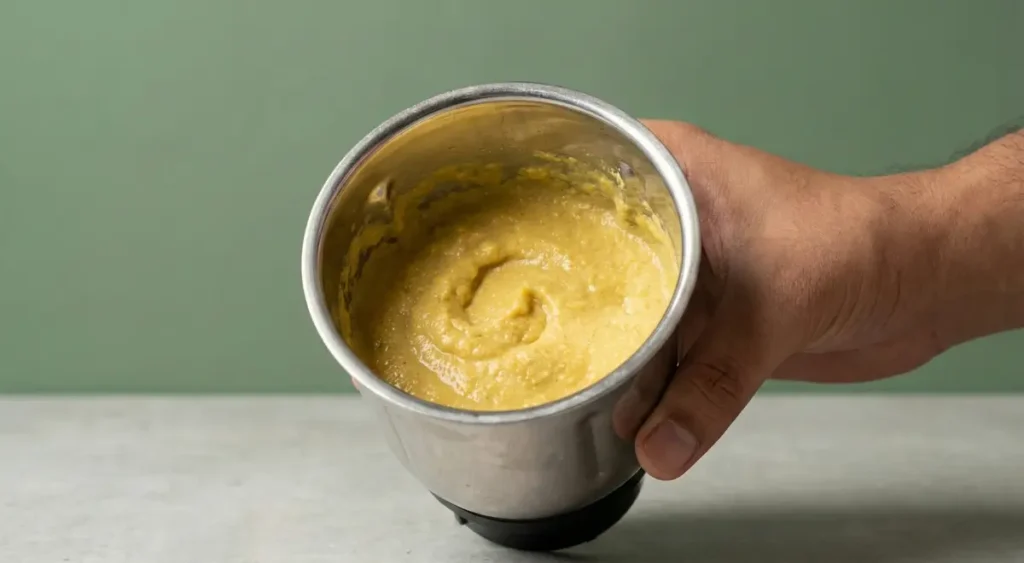 Bajaj Mixer Grinder Grinding Test 2
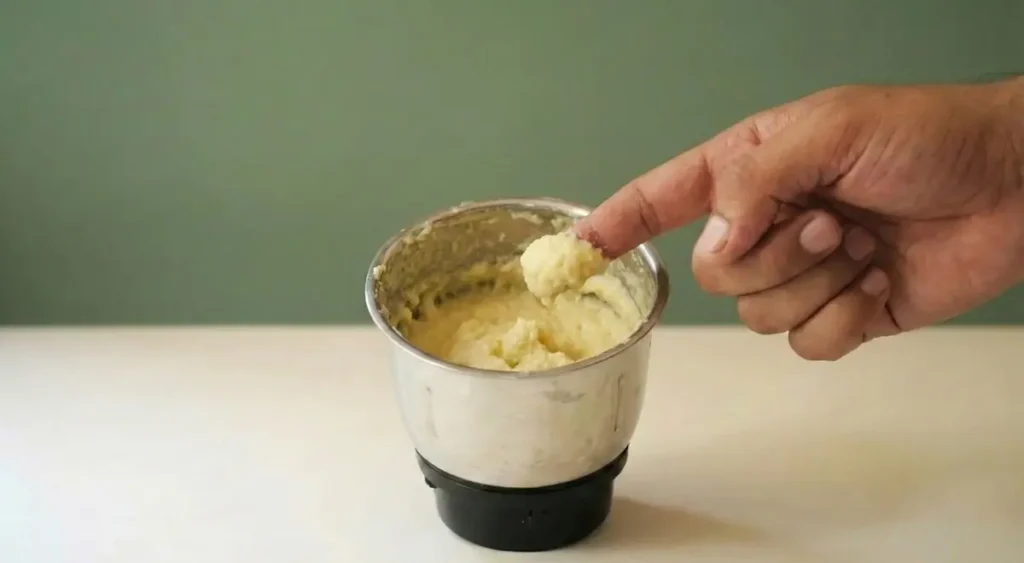 Bajaj Mixer Grinder Wet Grinding
2. The Turmeric (Haldi) Test
Grinding dry turmeric is the hardest job for a kitchen appliance. It breaks weak blades.
- Bajaj: It struggles here. You must break the turmeric sticks into small pieces with a hammer before putting them in the jar. If you put a whole stick in, the blade might get damaged.
- Sujata: It crushes solid turmeric sticks into fine powder in seconds. The 22,000 RPM speed turns rock-hard spices into dust instantly without needing a hammer.
Winner: Sujata. Perfect for home-made masala businesses.
3. The Chutney Texture
Do you like your coconut chutney silky smooth or slightly coarse?
- Bajaj: It does a great job for daily use. However, if you are in a rush, you might find small chunks of coconut left behind.
- Sujata: It pulverizes everything. Because the blade spins faster, it creates a paste that is restaurant-quality smooth.
Winner: Tie. (Bajaj is good enough for 90% of homes; Sujata is for perfectionists).
Durability: Why Shopkeepers Recommend Sujata
Have you ever noticed that almost every juice shop in India uses a Sujata mixer? It’s not because they like the design. It’s because Sujata is “unkillable.”
Here is why it outlasts Bajaj:
1. The Coupler Difference (The #1 Failure Point)
The “coupler” is the small plastic wheel with teeth that connects the jar to the motor. This is the part that breaks most often in Indian kitchens.
- Bajaj: Uses standard plastic couplers. If you overload the jar or don’t lock it properly, the teeth wear out (get stripped). It is a cheap fix (₹20-₹50), but it is annoying to run to the repair shop every 6 months.
- Sujata: Uses high-quality nylon components with metal inserts. They grip tight and rarely slip. You can use them roughly for years without the teeth breaking.
2. The Body Build & Stability
- Bajaj: It is lightweight. This is good for moving it around, but it means the machine can “dance” or vibrate if you are grinding heavy chutney.
- Sujata: It is heavy and stays planted. The body is made of thick, Shock-Proof ABS Plastic which can handle rough handling.
Vacuum Feet: Sujata is equipped with heavy-duty rubber vacuum feet. Because of the high torque (power), these feet grip the kitchen slab tightly so the machine doesn’t shift even during heavy grinding.
The Noise Reality (Read This Carefully)
There is one big reason not to buy Sujata.
It is loud.
Because Sujata uses a high-speed commercial motor (22,000 RPM), it creates a lot of wind noise.
- Sujata (90 dB): It sounds like a jet engine taking off in your kitchen. You cannot watch TV or talk on the phone while using it.
- Bajaj (80 dB): It is not “silent,” but it has a lower hum. It is much more manageable for a standard apartment.
Who should avoid Sujata?
If you have a newborn baby, elderly parents who are sensitive to noise, or if you live in a small apartment with thin walls, Sujata might be too aggressive for you. Bajaj is the safer, quieter choice.
Pro Tip: If you buy Sujata, place it on a rubber mat or a thick towel. It absorbs some of the vibration and reduces the sharpness of the sound.
5-Year Cost Analysis: The Hidden Truth
This calculation changes everything.
Right now, you are hesitating because Sujata costs ₹2000 more. But is it actually expensive? Let’s look at the math over 5 years.
Scenario A: You buy a Bajaj (₹3,500)
- Upfront Cost: ₹3,500
- Repairs (5 Years): You will likely replace the plastic couplers twice (₹100) and one jar or blade assembly once (₹400).
- Total Cost: ₹4,000
- Result: You saved money today, but you spent time visiting repair shops.
Scenario B: You buy a Sujata (₹5,500)
- Upfront Cost: ₹5,500
- Repairs (5 Years): ₹0. (Historically, these motors do not require service for the first decade).
- Total Cost: ₹5,500
- Result: It costs ₹1,500 more in total, but you get zero headaches.
The Financial Verdict:
If you want to save cash right now, Bajaj wins. But if you value your time and hate visiting service centers, Sujata is actually the cheaper “peace of mind” option.
Common Problems & Real User Doubts on: Sujata vs Bajaj
I spent hours reading forum discussions on Reddit and Quora to find the “unfiltered” problems users face. Here is what shopkeepers won’t tell you.
1. “It smells like burning rubber!”
The Panic: You buy a new mixer (either Sujata or Bajaj), turn it on, and immediately smell something burning. You think, “Did I just burn the motor?”
The Truth: Relax. This is normal. The varnish on the motor copper is “curing” (heating up) for the first time. This smell will disappear after the 3rd or 4th use. Do not return it for this reason.
2. The “Flying Lid” Issue
- Bajaj: A common complaint is that the jar lids can be loose. If you fill the jar to the top with liquid (like milkshake), the lid might pop off due to pressure. You must keep your hand on the lid while grinding.
- Sujata: The lids are tighter and heavier. They stay in place, but some users find them a bit hard to clean because of the complex locking ridges.
3. Safety Locks (Important Note)
- Bajaj: Most modern Bajaj models come with a twist-lock safety mechanism. The motor won’t start unless the jar is locked in place.
- Sujata: Sujata is old-school. It often lacks this electronic safety lock. The motor will spin even if the jar isn’t seated perfectly. You need to be a bit more careful and ensure the jar is pressed down firmly before switching it on.
4. “Where is the Service Center?”
- Bajaj: They have a massive network. You can find an official Bajaj service center even in small towns.
- Sujata: People worry because Sujata doesn’t have as many fancy service centers in South India.
The Reality: You don’t need one. Sujata uses standard, universal parts. Any local electrical repair shop in your neighborhood can fix a Sujata mixer in 10 minutes. You are never stuck.
Final Verdict: Sujata vs Bajaj Mixer Grinder
Let’s stop overthinking. Here is your final checklist to make the decision right now.
Go for Sujata Dynamix (900W) if:
- You live in a joint family (4+ members) and cook heavy meals.
- You grind Idli/Dosa batter at least once a week.
- You want a machine that will likely last 10+ years without repairs.
- You don’t mind the loud “industrial” noise.
Current Price: Approx. ₹6,800 – ₹7,000.
Go for Bajaj GX1 / Military Series (750W) if:
- You are a bachelor, student, or have a small family (2-3 people).
- You mostly make chutneys, tomato puree, and milkshakes.
- You want to save ~₹2,500 upfront for other kitchen items.
- You prefer a machine that looks modern and isn’t too loud.
Current Price: Approx. ₹3,900 – ₹4,500.
My Personal Recommendation:
If you can stretch your budget, buy the Sujata. The extra ₹2,500 you pay today is less than what you will spend on repairing a cheaper mixer over the next 5 years. It is an investment, not an expense.
FAQS on: Sujata vs Bajaj Mixer grinder
Here are the answers to the specific doubts most buyers have.
1. Can Sujata mixer grinder grind turmeric (haldi)?
Yes. This is Sujata’s main selling point. The 22,000 RPM motor crushes dried turmeric sticks into fine powder without damaging the blades. Warning: Do not try this with the Bajaj GX8 unless you break the turmeric into small pieces first.
2. Which is the best Sujata model for home use?
The Sujata Dynamix (900W) is the best seller because it comes with 3 jars (wet, dry, chutney). Avoid the “Powermatic Plus” unless you specifically need a juicer attachment. The juicer is bulky and hard to clean.
3. Is the Bajaj “Military Series” better than the GX Series?
Bajaj recently launched the “Military Series” (e.g., Glamore, Evoque) claiming higher durability. While they look tougher, they still use similar motors to the GX series. Stick to the classic Bajaj GX8—it is time-tested and parts are easier to find.
4. Does Sujata have a service center in South India?
Sujata has fewer official centers than Bajaj in the South. However, do not let this stop you. Sujata uses universal parts. Any local electrical repair shop in Chennai, Bangalore, or Hyderabad can fix it easily because the internal design is simple and standard.
5. Why is my new mixer smelling like burning rubber?
Do not return it! This is normal for both brands. The varnish on the motor coil releases a smell when it heats up for the first few times. The smell will vanish after 3-4 uses.
