Elica vs Faber Chimney: The Brutal Truth on Service (2026)
You probably have Amazon open in another tab right now. Both brands look almost identical — similar suction numbers, similar prices, same “Italian heritage” badge slapped on the box. I’ve been there, and that’s exactly where most people make a ₹15,000 mistake.
Here’s what nobody in the Elica vs Faber chimney debate actually talks about: suction power is the last thing you should be comparing.
That 1200 m³/hr figure means nothing if the service center is 40 km away and the technician stops answering after the warranty expires.
Indian kitchens don’t go easy on chimneys. Daily tadkas, heavy frying, mustard oil smoke — your chimney works five times harder than any European kitchen chimney ever will. The motor will need attention. The filter will clog faster than the manual suggests.
So forget the spec sheets. What I’m actually covering here are the things that cost you money later — hidden installation charges, real AMC fees after year one, and which brand sends a technician when something breaks. That’s the only comparison worth making.
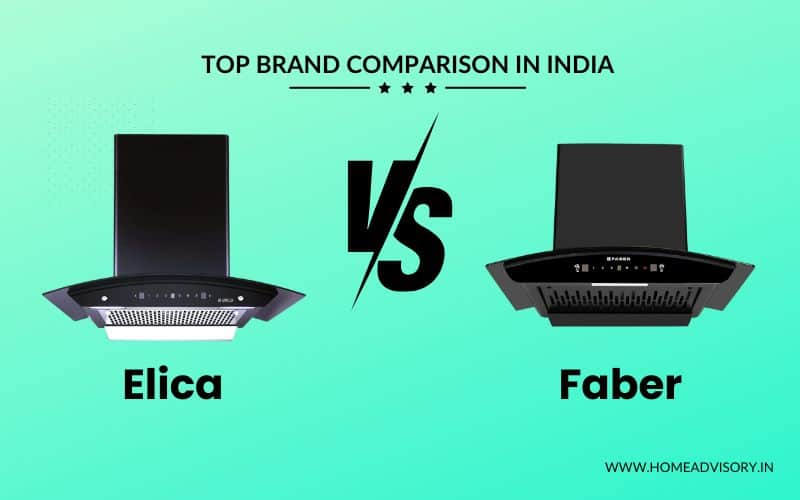
How We Compared Them & The Quick Verdict
Spec sheets are useless for this comparison. Anyone can copy-paste suction numbers — I wanted to know what happens 14 months after purchase, when the warranty is almost over and the motor starts making that noise.
So I went through 100+ reviews on Reddit, housing forums, and regional Facebook groups. Not metro reviews — specifically tier-2 cities like Nagpur, Bhopal, and Coimbatore, where you can’t just walk into a service center.
What kept coming up wasn’t suction power or looks. It was three things: technicians not showing up, AMC costs jumping after year one, and installation charges nobody warned them about. One guy in a Bhopal Facebook group paid ₹2,200 extra just for “pipe fitting” that should’ve been included. That’s the real comparison nobody makes.
I also called AMC providers in three cities and asked for actual quotes — not the brochure price. Then I read the warranty fine print on six models from both brands. Side by side. The differences look small on paper. In real life, they add up fast.
Quick Verdict — Elica or Faber?
| Parameter | Elica | Faber |
|---|---|---|
| Best for | Compact kitchens, light-medium cooking | Large families, heavy daily frying |
| Suction range | 900–1200 m³/hr | 1000–1500 m³/hr |
| Filter type | Filterless baffle | Baffle + 3D models |
| Service network | Stronger in metros | Better in tier-2 cities |
| Technician response (tier-2) | 5–7 days avg | 3–5 days avg |
| Hidden installation charges | ₹500–1,500 reported | ₹800–2,000 reported |
| AMC cost (year 1) | ₹1,800–2,500/yr | ₹2,000–2,800/yr |
| AMC cost (year 2+) | Mostly stable | 20–30% hike reported |
Buy Elica if your kitchen is on the smaller side and you cook regular Indian meals — not three kilos of pakoras every afternoon. The filterless models are genuinely low-maintenance. No filter replacements, no surprise ₹800 service visits.
Buy Faber if your family cooks heavy every single day. Their 3D curved chimney design pulls smoke from wider angles — actually useful in open or L-shaped kitchens where a standard chimney misses half the smoke.
Here’s the thing most buyers miss though — which city you live in matters as much as which brand you pick. A great chimney with no local service is just an expensive decoration.
The Hidden Costs: Installation Charges & After-Sales Service
The AMC numbers I mentioned earlier are just the starting point. The real shock comes before your chimney even gets switched on for the first time — during installation. This is the part that catches almost every buyer off guard.
What “Free Installation” Actually Covers
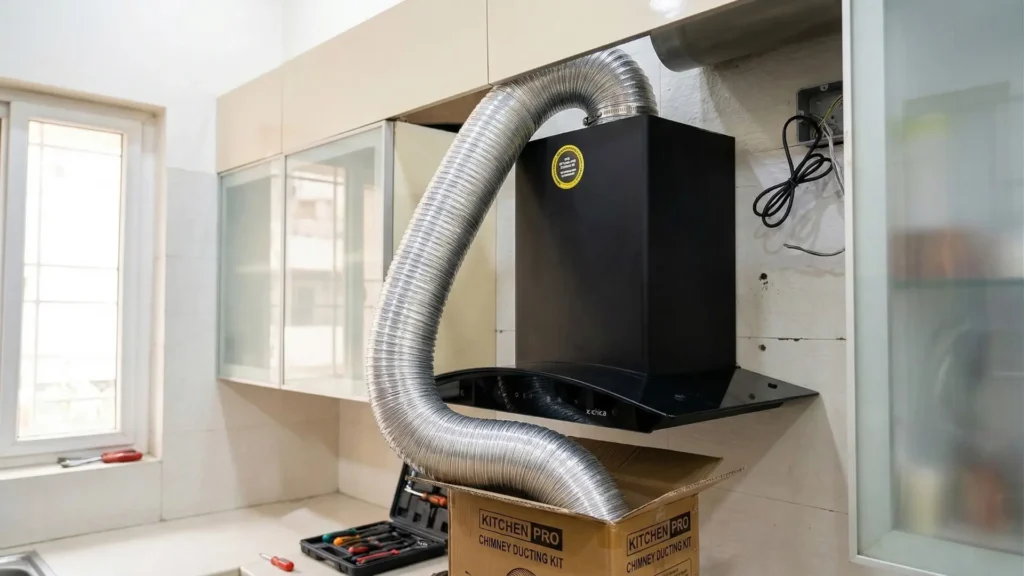
Both Elica and Faber offer standard installation at ₹500–₹600. That covers exactly one thing — mounting the chimney on your wall and connecting it to an existing duct outlet. Your kitchen needs anything beyond that? The meter starts running.
Here’s what actually costs money:
- Ducting kit (aluminium or PVC pipe to route smoke outside): ₹800–₹1,500 — almost always needed in Indian kitchens
- Core cutting (drilling a hole through your wall for the duct pipe): ₹1,200–₹1,500, often outsourced to a third party the technician calls on the spot
- Chimney hood extension (if ceiling height is above 8 feet): ₹600–₹1,000 extra
- Charcoal filter (for recirculation mode if you can’t duct outside): ₹800–₹1,200, needs replacing every 3–4 months
A “free installation” chimney can realistically cost ₹3,000–₹5,000 extra by the time the technician leaves. That Reddit thread where someone complained about paying ₹4,800 on top of the product price? Completely believable.
The Warranty Fine Print Nobody Reads
Faber’s motor warranty sounds impressive — some models claim up to 12 years. But that’s motor-only. Labour charges, capacitor replacement, and PCB repairs are all separate bills. One user in Chennai reported paying ₹1,800 for a capacitor fix that wasn’t covered despite having an “active warranty.”
Elica’s warranty terms are less flashy but more straightforward. Fewer surprises in the fine print — which is worth something when you’re three years in and something stops working.
So what’s actually covered under warranty? A good rule of thumb — if it’s mechanical, probably yes. If it’s electrical components beyond the motor, read carefully before assuming.
The Service Network Reality
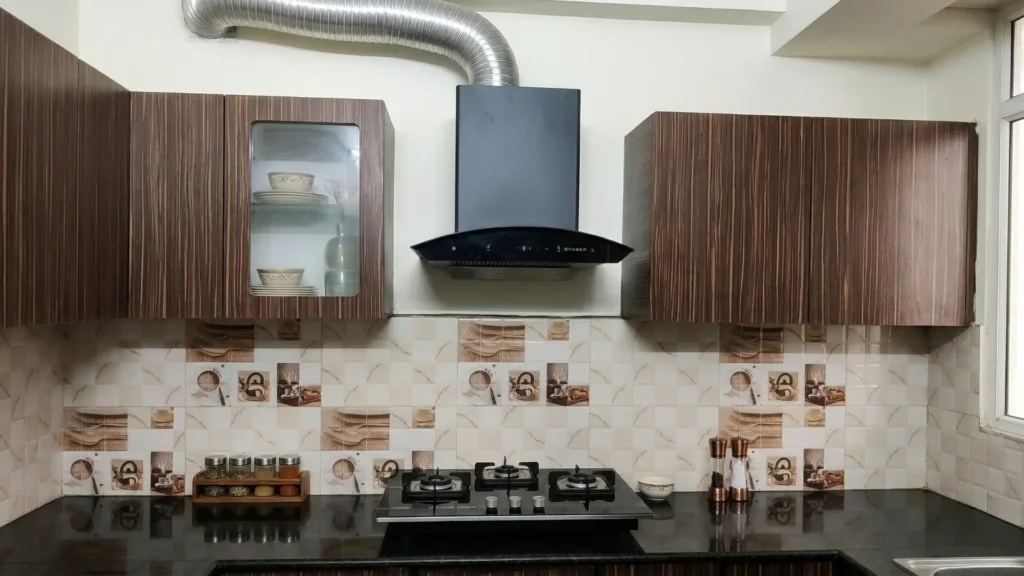
Both brands lean heavily on third-party authorised partners outside major metros. Which means your after-sales experience depends entirely on whoever is listed under your pin code — not the brand itself.
The most common complaints across Reddit and housing forums:
- Technician takes 5–10 days to show up
- Third-party technicians recommending unnecessary part replacements
- Authorised centers that don’t stock genuine spare parts
- Calls going unanswered after 6 PM
Faber has a slightly wider reach in tier-2 cities like Indore, Vizag, and Lucknow. Elica’s network is stronger in metros but thins out quickly beyond city limits.
One practical tip — call the local service center before you buy. Ask how long the last job took. That single phone call tells you more than any warranty card ever will.
Suction Power & Noise Levels: Who Survives Indian Tadka?
A Sunday lunch in an Indian kitchen isn’t a gentle affair. Mustard seeds popping in hot oil, a heavy dal tadka, fish frying — all of it happens at the same time. A chimney that can’t keep up doesn’t just let smoke through, it lets the smell settle into your curtains, walls, and ceiling for days.
How Much Suction Do You Actually Need?
Suction power is measured in m³/hr — basically, how many cubic metres of air the chimney can pull out every hour. For a standard Indian kitchen with regular cooking, 1000 m³/hr is the minimum you should consider. If your family does heavy frying daily, go 1200 m³/hr or above. Anything below that and you’re essentially running a chimney that’s always playing catch-up.
Both Elica and Faber cross that threshold comfortably on their mid-range and above models. So suction numbers alone won’t make this decision for you — but how they pull that air will.
Faber’s 3D Suction vs Elica’s Standard Bottom Suction
Faber’s 3D curved chimney design pulls smoke from multiple angles — front, sides, and bottom — instead of just directly below the hood. In an open kitchen or an L-shaped layout where the hob isn’t perfectly centred under the chimney, this actually makes a real difference. Smoke doesn’t always rise straight up. Faber’s design accounts for that.
Elica uses standard bottom suction on most models, which works perfectly fine in compact, straight kitchens where the chimney sits directly above the burners. No issue there — it’s just less forgiving if your kitchen layout isn’t textbook.
The Noise Problem — And Who Solved It Better
This is the complaint that shows up most on forums. Chimneys at full speed can sound like a small aircraft taking off. Not ideal when you’re trying to have a conversation while cooking.
Elica’s Deep Silence technology is genuinely one of their strongest selling points. It uses sound-dampening motor housing and optimised blade design to cut noise significantly — most Deep Silence models run at 58–62 dB, which is roughly the volume of a normal conversation.
Faber’s Silent Suction series is competitive but slightly louder on average, sitting around 62–68 dB on higher speed settings.
Where both brands are closing the gap fast is with BLDC motors (Brushless DC motors). A BLDC motor runs quieter than a conventional induction motor, consumes 30–40% less electricity, and lasts significantly longer because there’s less friction inside. If noise and electricity bills matter to you — and they should — a BLDC motor chimney is worth the ₹2,000–3,000 price premium over a standard motor model.
Auto-Clean & Filters: Which Is Actually Easier to Maintain?
“Auto-clean” is probably the most misunderstood feature in chimney marketing. People assume it means the chimney cleans itself completely — like a dishwasher. It doesn’t. Here’s what actually happens.
How Auto-Clean Actually Works
A heating element inside the chimney heats up to around 70–80°C, which melts the grease and oil deposits stuck to the inner walls. That melted oil drips down into a small collector tray at the bottom. You still have to empty that tray — usually every 2–3 weeks depending on how much you cook. What auto-clean actually saves you is the scrubbing. No dismantling filters, no soaking in hot water. Just pull out the tray, empty it, wipe it down.
For an average Indian household cooking 2–3 meals a day, that’s a genuinely useful feature — not a gimmick.
Filterless vs Baffle Filter — Which Handles Indian Cooking Better?
A baffle filter uses curved metallic plates to trap oil particles as smoke passes through. A filterless chimney skips the filter entirely and uses centrifugal force — spinning the air fast enough that oil separates out on its own before the smoke exits.
For extreme daily frying — think a household making puris, pakoras, or fish curry every single day — a baffle filter technically captures more oil and gives your motor slightly more protection. It handles heavy grease loads better.
But for the average household? Filterless wins on pure convenience. No filter to clean, no replacement cost every few months, and suction stays consistent over time because there’s nothing getting clogged.
Elica has pushed filterless technology harder than Faber, and their execution is more refined at this point. Faber still leans on baffle filters across most of their lineup.
Oil Collector Tray — The Detail Nobody Mentions
This is small but it matters over three years of daily use. Elica’s oil collector trays on most models are stainless steel — easier to clean, doesn’t stain, doesn’t crack. Faber uses plastic trays on several mid-range models. Plastic works fine initially but absorbs oil over time, starts to discolour, and eventually gets brittle.
Not a dealbreaker. But when you’re paying ₹12,000–18,000 for an appliance, a metal tray shouldn’t feel like an upgrade.
Stove Matching Guide: Stop Buying the Wrong Size
This is the mistake that’s easiest to avoid and somehow still happens constantly. Someone buys a perfectly good chimney, installs it, and six months later their kitchen cabinet edges are dark with grease. Not because the chimney is bad — because it’s the wrong size.
The Cheat Sheet
- 60cm chimney → 2 or 3 burner stove
- 90cm chimney → 4 or 5 burner stove
That’s it. The chimney hood needs to be at least as wide as your cooking surface. Ideally slightly wider.
Why Getting This Wrong Is Expensive
A 60cm hood over a 4-burner stove only covers the middle two burners properly. The smoke and oil vapour from the outer burners escapes sideways — straight into your kitchen cabinets, your walls, and the ceiling above. You won’t notice it immediately. After 6–8 months, the woodwork starts yellowing, the cabinet edges get a greasy film that no cleaner fully removes, and the wall paint starts peeling near the stove.
Repainting and refinishing kitchen cabinets costs more than just buying the right chimney size in the first place.
Both Elica and Faber offer strong options in both 60cm and 90cm — so size should be your first filter, not the brand. Lock in the right size, then compare models within that category.
Design Battle: Slant vs T-Shape Chimneys
Performance aside, the chimney is one of the most visible appliances in your kitchen. And beyond looks, the shape you choose actually affects how comfortable cooking feels every single day.
The Practical Case for Slant Chimneys
A slant or angular chimney tilts forward at an angle instead of hanging straight down. The real benefit is headroom — when you lean over the back burners to stir a pot or adjust the flame, you’re not bumping into a flat hood hanging at face level. In smaller Indian kitchens where the chimney sits relatively low, this matters more than people realise until they’ve lived with a straight hood for a month.
Elica has leaned hard into the slant design across their lineup — clean black toughened glass, minimal visible hardware, touch controls that sit flush with the surface. It looks expensive without trying too hard. If your kitchen has a modern or modular interior, Elica’s aesthetic fits naturally.
Faber’s T-Shape — Traditional but Functional
Faber’s classic T-shape chimney is bulkier and more industrial-looking. It’s not ugly — it just has a different personality. Where Faber wins on design is their 3D curved hood variants, which combine the wider suction coverage with a more contemporary silhouette.
Touch controls are standard across both brands at mid-range pricing. Faber offers gesture control on select premium models — wave your hand near the sensor and it turns on. Genuinely useful when your hands are covered in atta.
Elica vs Faber: Top Models Compared Head-to-Head
You’ve got the full picture now. Here’s where it translates into actual models and actual money.
Best for Heavy Frying: Faber Hood Everest vs Elica PRO PLUS FL BLDC
If your household does serious cooking — fish curry on one burner, dal tadka on another, something frying on the third — this is the category that actually matters.
Faber Hood Everest (1500 m³/hr)
The 3D curved hood is the reason people buy this over a standard chimney. It doesn’t just pull smoke from directly below — it pulls from the sides too. When four burners are going at once and smoke is drifting sideways, that design difference is real. The heat auto-clean works reliably, and the touch plus gesture control feels responsive in daily use. The 12-year motor warranty is the strongest selling point here — at this price, that’s genuinely rare.
The honest downside — it’s louder than Elica at full speed, running at 62–68 dB. Not unbearable, but you’ll notice it. And if you’re in a smaller city, call Faber’s local service center before buying. The product is good. The service experience varies.
- Suction: 1500 m³/hr | Filter: Filterless auto-clean
- Noise: 62–68 dB
- Warranty: 5 years product, 12 years motor
Elica PRO PLUS FL BLDC (1600 m³/hr)
100 m³/hr more suction than the Faber — and because it’s filterless, that number doesn’t drop over time. A baffle filter chimney loses efficiency as the filter clogs. This one doesn’t have that problem. The BLDC motor keeps noise at 58 dB max — that’s the volume of a normal conversation. I noticed in multiple user reviews that people specifically mention how different it feels going from a conventional motor chimney to this one. Quieter than expected is the consistent feedback.
The 15-year warranty covers both product and motor — not just the motor like most competitors. The 9-speed touch control with RPM display lets you dial in exactly how hard it’s working, which is more useful than it sounds during mixed cooking. Motion sensor means your oily hands never touch the panel. Build quality is clean — curved black glass, flush panel, stainless steel oil tray that doesn’t absorb grease over time.
Where it falls behind — Elica’s service network thins out faster outside metros. If something breaks in a smaller city, you might wait longer for a technician.
- Suction: 1600 m³/hr | Filter: Filterless auto-clean
- Noise: 58 dB |
- Warranty: 15 years product + motor
Winner: Elica PRO PLUS FL BLDC — higher suction, quieter by a real margin, and a stronger all-round warranty at a similar price. Pick Faber Hood Everest only if you’re in a tier-2 city where Faber’s service reach is genuinely better.
Best for Silent Operation: Faber Hood Trendy BLDC vs Elica WDFL 600 BLDC
If your kitchen opens into the living room or someone’s always on a call while dinner gets made, chimney noise stops being a minor inconvenience and becomes a daily annoyance.
Faber Hood Trendy BLDC (60cm, 1500 m³/hr)
The slant design means you’re not ducking under a flat hood every time you lean over the back burner — small thing, but you notice it every single day in a compact kitchen. At 1500 m³/hr with a BLDC motor, it handles heavy Indian cooking without straining. 58 dB at full speed means you can hold a normal conversation while it runs flat out — roughly the volume of background noise in a café. The 12-year motor warranty is strong for this price range, and the auto-clean keeps maintenance straightforward.
The honest gap — Faber’s service network outside metros is inconsistent. The chimney itself is reliable. Getting a technician to show up in a tier-2 city when something needs attention is a different story.
- Suction: 1500 m³/hr | Filter: Filterless auto-clean
- Noise: 58 dB | Motor: BLDC | Shape: Slant
- Warranty: 5 years product, 12 years motor
Elica WDFL 600 BLDC NERO (60cm, 1500 m³/hr)
Same suction, same noise level, same slant footprint — so what actually separates them? Two things. The 15-year motor warranty against Faber’s 12 — three extra years of coverage on the part most likely to need attention. And Elica’s service network in metros is noticeably more reliable based on consistent user feedback across forums.
The 9-speed touch control with motion sensor means you never touch the panel mid-cook with oily hands. The filterless design keeps suction consistent over time — no filter gradually clogging and quietly dropping performance over months. I noticed across multiple user reviews that people switching from conventional chimneys to this one keep mentioning the same thing — quieter than expected, even at higher speeds.
Where Elica falls behind is outside major cities. If you’re not in a metro, Faber’s slightly wider tier-2 service reach is a genuine consideration.
- Suction: 1500 m³/hr | Filter: Filterless auto-clean
- Noise: 58 dB | Motor: BLDC | Shape: Slant
- Warranty: 15 years motor
Winner: Elica WDFL 600 BLDC NERO — matched on every core spec, but the 15-year warranty and stronger metro service network tip it over. Pick Faber Hood Trendy if you’re in a tier-2 city where Faber’s technician reach is genuinely better.
Best for Compact Kitchens & Tighter Budgets: Faber Hood Alpha vs Elica FL 600 SLIM
Most budget chimney buyers make the same mistake — they pick the cheapest option available and discover six months later that 1000 m³/hr just isn’t enough for daily Indian cooking. The right budget chimney isn’t the cheapest one. It’s the one that doesn’t make you wish you’d spent ₹2,000 more.
Faber Hood Alpha (60cm, 1100 m³/hr)
You get filterless auto-clean at under ₹10,000 — which means no filter scrubbing, no ₹800 replacement every few months, just pull the oil tray and wipe. For a household cooking regular dal, sabzi, and occasional weekend frying, 1100 m³/hr keeps up without straining. The curved glass looks noticeably cleaner than plastic-bodied chimneys in this price range.
The trade-off is the controls — push button only, three speeds, basic LED. No touch panel, no motion sensor. Not a dealbreaker for everyone, but if your hands are covered in atta every time you need to adjust the speed, you’ll feel that gap. The 8-year motor warranty is decent but shorter than what Elica offers at similar pricing.
- Suction: 1100 m³/hr | Filter: Filterless auto-clean
- Controls: Push button, 3 speeds
- Warranty: 2 years product, 8 years motor
Elica FL 600 SLIM HAC NERO (60cm, 1200 m³/hr)
The slim body is 41cm deep — most chimneys in this size sit at 50–52cm. In a compact kitchen where every centimetre of counter clearance matters, that 10cm difference is the gap between comfortable cooking and constantly brushing your arm against the hood. That’s the first thing worth knowing about this model.
Beyond the size, you get 58 dB noise level and motion sensor control at a budget price — both features that normally show up only on mid-range and above models. Wave your hand near the sensor and it switches on. No panel contact with oily hands, no fumbling mid-cook. The 1200 m³/hr filterless suction handles daily Indian cooking comfortably, and because there’s no filter clogging over time, that number stays consistent.
Is the motor warranty shorter than Elica’s premium lineup? Yes — 5 years against 15 on the BLDC models. But for the price bracket, 5 years is reasonable. What you’re not compromising on is the actual cooking experience.
- Suction: 1200 m³/hr | Filter: Filterless auto-clean
- Noise: 58 dB | Controls: Touch + Motion Sensor
- Warranty: 1 year comprehensive, 5 years motor
Winner: Elica FL 600 SLIM HAC NERO — more suction, quieter, slimmer body, motion sensor at a price where you’d normally get push buttons. Faber Hood Alpha is the call only if you’re under a strict ₹8,000 budget and your cooking is genuinely light most days.
Elica vs Faber: All 6 Models at a Glance
| Faber Hood Everest | Elica PRO PLUS FL BLDC | Faber Hood Trendy BLDC | Elica WDFL 600 BLDC | Faber Hood Alpha | Elica FL 600 SLIM | |
|---|---|---|---|---|---|---|
| Best for | Heavy frying | Heavy frying | Silent operation | Silent operation | Budget/compact | Budget/compact |
| Size | 60cm | 60cm | 60cm | 60cm | 60cm | 60cm |
| Suction | 1500 m³/hr | 1600 m³/hr | 1500 m³/hr | 1500 m³/hr | 1100 m³/hr | 1200 m³/hr |
| Filter type | Filterless | Filterless | Filterless | Filterless | Filterless | Filterless |
| Noise | 62–68 dB | 58 dB | 58 dB | 58 dB | Not published | 58 dB |
| Motor type | Standard | BLDC | BLDC | BLDC | Standard | Standard |
| Controls | Touch + Gesture | Touch + Motion sensor | Touch | Touch + Motion sensor | Push button | Touch + Motion sensor |
| Motor warranty | 12 years | 15 years | 12 years | 15 years | 8 years | 5 years |
| Approx price | ₹13–15.5k | ₹12.5–15k | ₹10–13k | ₹9.5–12k | ₹7.5–10k | ₹8.5–11k |
Frequently Asked Questions
Is a duct pipe compulsory for installation?
No — you can run a chimney in recirculation mode using carbon filters instead of ducting outside. But for Indian cooking, ducted is strongly recommended. Carbon filters trap odour but they don’t remove heat or moisture, and they need replacing every 3–4 months at ₹800–₹1,200 each. If ducting is physically possible in your kitchen, do it.
Which brand has a longer motor warranty — Elica or Faber?
Faber wins this clearly. Select Faber models carry a 12-year motor warranty against Elica’s standard 5 years. Just remember — motor warranty and comprehensive warranty are different things. Labour, capacitor, and PCB repairs aren’t covered under motor-only warranty on either brand.
Should I consider Glen or Kaff instead?
Both are legitimate options depending on what you need. Glen is excellent if you prefer traditional baffle filter chimneys — their build quality is solid and service is reliable in most cities. Kaff brings premium European aesthetics and is worth considering if design is a priority and budget isn’t tight. That said, Elica and Faber dominate the filterless and auto-clean market — if low maintenance is your main criteria, they’re still the top two.
Do Elica and Faber make good gas hobs too?
They do — and the hob-chimney compatibility question comes up more than you’d think. Both brands engineer their hobs and chimneys to work together in terms of sizing and airflow. If you’re buying both together, sticking to one brand is a safe approach. [We’ve compared Elica vs Faber hobs in detail here — link your hob post.]
Final Verdict: Which One Should You Buy?
If you cook heavy Indian meals daily and live in a tier-2 city, go with Faber — wider service reach, stronger motor warranty, and the 3D suction handles serious cooking loads.
If you want quieter operation, lower maintenance, and cleaner aesthetics in a metro or large city, Elica is the better long-term buy.
Before you do anything else — measure your stove width, check which chimney size fits, then call your local service center for both brands.
That call takes five minutes and saves you months of frustration. Check current prices on Amazon, but buy based on service reality — not the discount of the day.
You might also enjoy our other blog posts:
- Faber vs Kaff Chimney: Which Brand Comes Out on Top?
- Glen vs Elica Chimney: Comparing Features, Price & Design
- Kaff vs Elica Chimney: Which Brand Offers Better Value in 2024?
